In modern logistics, receiving inventory isn’t just a warehouse task—it’s a control point that determines whether your entire fulfillment operation runs smoothly or spirals into costly inefficiencies. For global 3PL providers like SendFromChina, inbound accuracy directly impacts shipping speed, customer satisfaction, and profitability.
This guide breaks down how to streamline inbound goods—from dock scheduling to system integration—using real-world practices, operational insights, and proven frameworks.
What Is Receiving Inventory?
Receiving inventory refers to the process of accepting, verifying, and recording inbound goods into a
warehouse or
fulfillment center. It includes unloading shipments, inspecting products, matching them against documentation, and making them available for storage and fulfillment.
Think of it as the “moment of truth” in logistics. Goods transition from uncertain transit into controlled, traceable stock. When done right, it ensures
inventory accuracy and operational flow. When done poorly, it creates errors that ripple across the entire supply chain.
Why Receiving Inventory Matters More Than You Think
Receiving is not a back-end function—it’s the foundation of fulfillment performance.
A weak receiving process leads to:
Mislabeling and picking errors
Increased returns and customer complaints
Higher labor costs due to rework
On the flip side, optimized receiving delivers:
Near-perfect inventory accuracy
Faster “dock-to-stock” time
Improved supplier relationships
Better warehouse productivity
In short: If receiving is broken, everything downstream suffers.
The End-to-End Receiving Inventory Process
Let’s walk through a streamlined inbound workflow used by high-performing
3PLs.
Pre-Receiving Preparation
Before goods arrive, preparation sets the tone:
Review Purchase Orders (POs) and Advance Shipping Notices (ASNs)
Schedule dock appointments
Allocate labor and equipment
Prepare staging zones
Pre-receiving ensures you’re not reacting—you’re ready.
Arrival & Dock Management
When the truck arrives:
Verify carrier documents (Bill of Lading, ASN)
Assign dock doors
Control traffic flow to avoid congestion
Efficient dock scheduling reduces bottlenecks and improves throughput.
Unloading & Initial Check
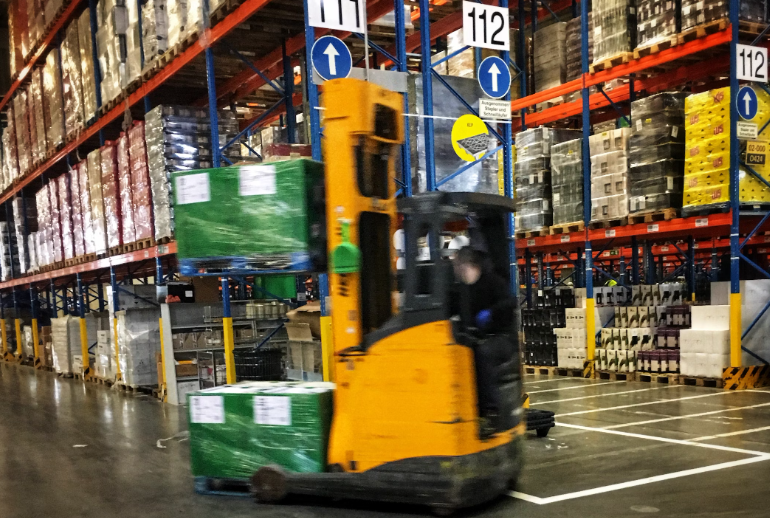
Goods are unloaded using forklifts, pallet jacks, or manual labor.
At this stage:
Count pallets or cartons
Perform a quick visual inspection
Separate items by
SKU or destination
This is the first checkpoint for catching major issues early.
Inspection & Verification
This is where accuracy is built—or lost.
Warehouse teams:
Match goods against PO and ASN
Verify SKU, quantity, and packaging
Inspect for damage or quality issues
Many warehouses use AQL (Acceptable Quality Level) sampling instead of full inspection to balance speed and accuracy.
Defective goods should be moved to a quarantine zone to prevent accidental fulfillment.
Inventory Recording & Labeling
Once verified:
Labels, barcodes, or pallet IDs are assigned
Inventory becomes “available” for fulfillment
This step bridges physical goods and digital systems. Without it, inventory exists physically—but not operationally.
Staging & Putaway
After system entry:
Goods move to staging areas
WMS directs optimal storage locations
Items are stored based on velocity, size, or category
Efficient putaway reduces picking time and improves warehouse flow.
Key Documents in the Receiving Process
Every inbound shipment should be backed by documentation:
Purchase Order (PO) – What was ordered
Advance Shipping Notice (ASN) – What’s arriving
Bill of Lading (BOL) – Carrier confirmation
These documents ensure traceability and accountability throughout the process.
Common Receiving Challenges (And How to Fix Them)
Even experienced warehouses struggle with inbound inefficiencies.
Manual Data Entry
Manual processes slow receiving and increase errors.
Solution: Use barcode scanning and automation.
Poor Labeling Standards
Inconsistent labeling leads to picking delays and confusion.
Solution: Standardize SKU labeling and enforce compliance.
Lack of Real-Time Inventory Updates
Delays in system updates create “phantom stock.”
Solution: Sync inventory instantly via WMS.
Inefficient Layout
Cluttered docks slow down operations.
Solution: Design clear zones:
Unloading → Inspection → Staging → Storage
Supplier Non-Compliance
Incorrect shipments create rework.
Solution: Establish vendor guidelines and feedback loops.
Best Practices to Streamline Inbound Goods
Standardize Everything
Consistency reduces errors:
Use checklists
Create SOPs for every shipment
Train staff regularly
Optimize Warehouse Layout
A well-designed receiving area:
Reduces travel time
Prevents congestion
Improves safety
Leverage Technology
Modern warehouses rely on:
Barcode scanners
WMS integration
These tools enable real-time tracking and reduce human error.
Implement Quality Control Early
Catching issues at receiving prevents downstream problems.
Remember: Receiving is your last chance to stop bad inventory.
Measure Key Metrics
Track performance with:
Dock-to-stock time
Receiving accuracy rate
Supplier compliance rate
Labor cost per shipment
What gets measured gets improved.
One-Stage vs Two-Stage Receiving
Different operations require different approaches.
One-Stage Receiving
Goods go directly to storage
Faster, less handling
Best for simple, uniform SKUs
Two-Stage Receiving
Goods staged, inspected, then stored
More accurate, more controlled
Ideal for complex or mixed inventory
Choosing the right model depends on volume, SKU diversity, and accuracy requirements.
The Role of 3PL Providers in Receiving Inventory
For global sellers, outsourcing to a 3PL like
SendFromChina offers advantages:
Expertise in high-volume inbound logistics
Advanced warehouse systems
Faster integration into fulfillment
Scalable operations across regions
A professional 3PL transforms receiving from a bottleneck into a competitive advantage.
How to Build a High-Performance Receiving Operation
Here’s a practical blueprint:
Digitize all inbound workflows
Standardize receiving procedures
Train teams continuously
Enforce supplier compliance
Monitor KPIs and improve continuously
Receiving isn’t a one-time setup—it’s an evolving system.
Future Trends in Inventory Receiving
The next generation of receiving is already taking shape:
AI-powered inventory recognition
Automated unloading systems
Real-time IoT tracking
Robotics-assisted putaway
As eCommerce grows, speed and accuracy at the inbound stage will only become more critical.
Conclusion
Receiving inventory is where operational excellence begins. It’s the gateway between supply and fulfillment, and the point where accuracy, efficiency, and profitability are either secured—or lost.
By standardizing processes, leveraging technology, and partnering with experienced 3PL providers like SendFromChina, businesses can transform inbound logistics into a strategic advantage.
FAQs
What is the main goal of receiving inventory?
To verify, record, and prepare inbound goods for storage and fulfillment.
What is dock-to-stock time?
The time it takes for goods to become available in inventory after arrival.
Why is inventory receiving important?
It ensures accuracy and prevents costly downstream errors in fulfillment.
What tools are used in receiving?
Common tools include barcode scanners, WMS systems, and RFID technology.
How can I improve my receiving process?
Standardize workflows, use automation, train staff, and track performance metrics.






 Post Views:392
 TAGS:
TAGS:
 Want to know about our services, fees or receive a custom quote?